Showing posts with label John 6. Show all posts

Sunday, August 26, 2012

Argument or Agreement


Have you ever walked into a church and said, “How lovely!” Perhaps it was in a cathedral where you were awestruck looking up at the vaulted ceilings and stained glass.

I know I thought I had seen some amazing artwork and architecture in the churches and cathedrals in Italy, but when I walked into St. Peter’s I was overwhelmed by the size and incredible beauty of that awe-inspiring cathedral PLUS all the artwork in the many chapels.
There are few places where you simply cannot take it all in. St. Peter’s is certainly one where there is ‘more than the eye can see’.....What a fitting place to worship God!


When I planned my ordination service, I chose Psalm 84 as the first reading for its wonderful description of the House of God. I love this Psalm. On that day, I felt like one of the birds mentioned, (sparrows) who had found a home in the Temple of God.
    “Those who live in your house are truly happy;
        they praise you constantly.
    Those who put their strength in you are truly happy;
        Pilgrimage is in their hearts.”
On the day, when I was ordained, I felt what the psalmist voiced,   
 “Better is one day in your courts than a 1,000 elsewhere!”
And I still feel that way.

This psalm about a pilgrim’s journey to worship God in Solomon’s re-built Temple, gives us a peek into his/her spiritual journey.

    The pilgrim described in Ps. 84 yearns for closeness or communion with God and looks forward to that experience in the one place known to hold God’s presence. He or She writes specifically of the joy experienced when celebrating God’s presence in the life of worship carried on at the Temple.
    Our understanding of God’s presence has changed since Solomon’s time.     What remains true, is that strong spiritual feelings, especially the yearning for God, are feelings not easy to communicate. Like my experience at St. Peter’s and my feelings at my ordination, my words can’t begin to convey what I experienced.

    As Barbara Brown Taylor wrote,
“There are things no one can talk about. [and yet] if we insist on trying, as we are inclined to do, something unforgettable may happen in the air around our words, but it will not be because we understand (them) in any rational way. The experience will be one of worship--or awe--which involves a different kind of understanding.”1 


    The Pilgrim of Ps. 84, wrote poetry to express an understanding of God’s presence. A pilgrim’s joy is a very ‘different’ kind of understanding.

    While we don’t limit God’s presence to a single place, we can still appreciate the beauty of cathedrals and churches that proclaim God’s glory by their physical features. We even experience  a certain joy when we arrive here..in our small ‘temple’ and find it bright with the feeling of God.

    Yet you may already be uncomfortable with all the talk about buildings.
    Is it right to put so much money into a PLACE? Even a place of worship? How much gold, silver, valuable artwork, fine cloth hangings and weavings, and expensive architecture is the ‘right’ amount to express our worship of God?


    We who have been raised in America, home of the Puritan tradition have been greatly effected by the desire to simplify worship. Our Brethren ancestors were lovers of simplicity. They met in homes for worship and when they needed a larger place, they built simple meeting houses, with HARD, straight-backed pews, and no raised chancels, no ornaments, not even crosses.

    If you were raised brethren, or baptist, or another tradition descended from these simple-loving settlers of America, It is not easy to accept the value of putting large sums of money into a building.


   Even in this century, we struggle with the choice between the ‘do-it-ourself’ approach and hiring experts in order to experience the beauty of professional results. Especially when our talents do not extend into the area of renovation...
Idol? the problem with bricks and mortar.
    We recognize the problem with putting our focus into bricks and mortar. . .

    You know the questions: “What is appropriate ornamentation?”
“How much should we spend on an exalted building to express our love of God?”
“Can we quantify the Glory of God by showcasing beauty with art-work?”
 “Do we celebrate God’s gifts with such displays or are we being ‘proud & puffed-up’?”

    The problem extends beyond the facility to the very institution of ‘church’. How much money, time and effort goes into an organization in order to glorify God? .  .  .
    “Just how much is ‘too’ much?”

I think it is a very hard question for us.

    Someone may ask if we are creating an IDOL that captivates the center of our worship or is there another way to think about how we focus our attention on God?


    Rather than an idol, we might view our ‘cathedral’ as an ICON.
    “That which points beyond itself to the reality of God.”

    Ancient worshippers, in an age of illiteracy, discovered the gift of using images as ‘windows’ into contemplating God.

  
 There are icon painters today that speak of the spiritual experience of painting such a work; how their hands are guided and they feel real communion with the presence of God.
    Spiritual connection is conveyed from the work to the worshipper who uses the ‘window’ to center on God. It is a way of ‘understanding’ that reaches beyond words. (As BBT said.)

 Perhaps our sanctuary, like many other places of beauty, POINT beyond the physical to point us to God.
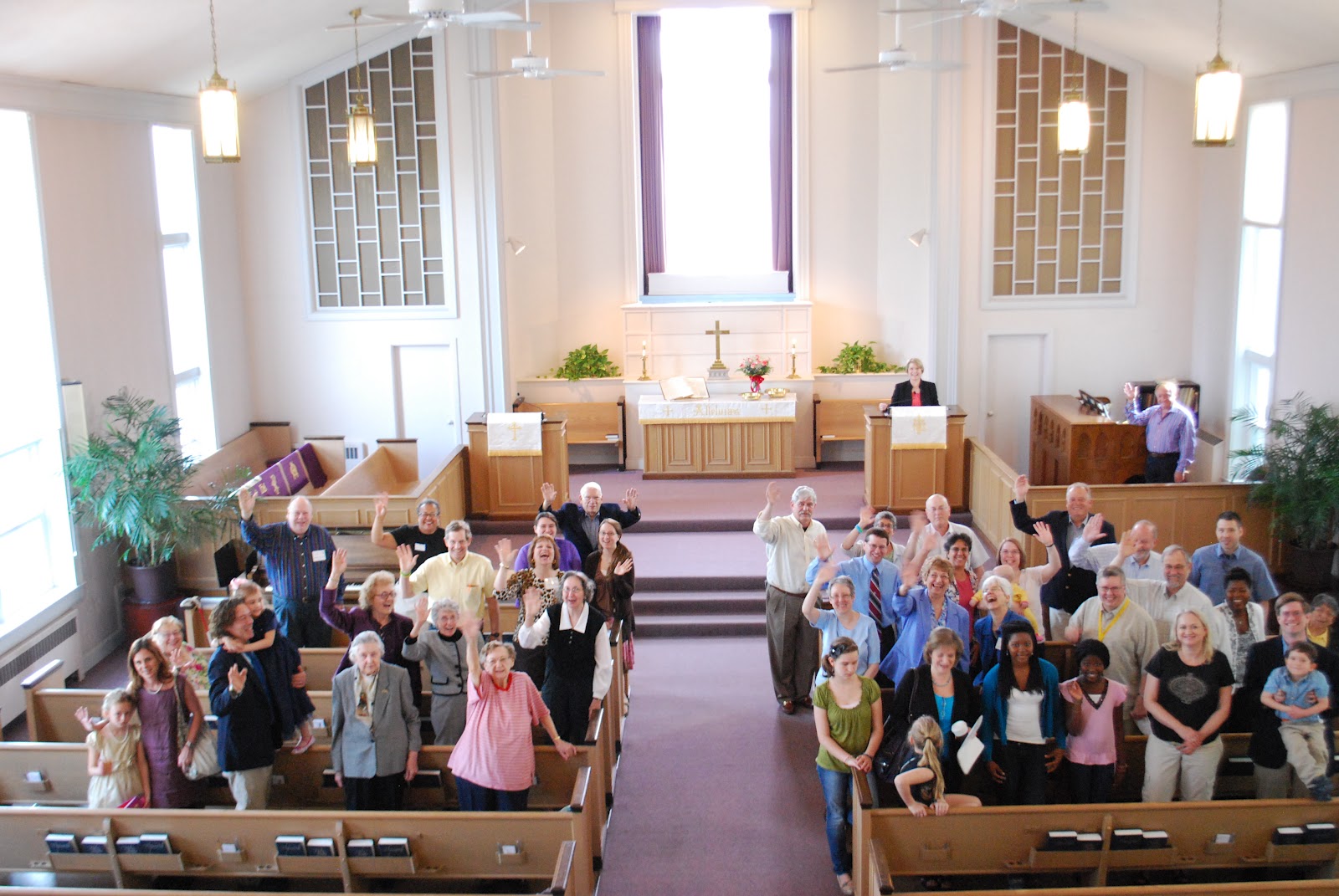

If so, then we can rest in the greater purpose and pay attention to God.
We do not keep this lovely building in top shape so that WE can be proud of it. We do it for God’s glory.
We invite other congregations to use this space, why? so this lovely building can point others to God. Our ministry partner congregations may worship in different ways, but they all seek communion with God.

The greater purpose of seeking God also explains why we are trying to find ways to make this sanctuary more accessible for people with disabilities. We don’t do it just to accommodate pastors who have had foot surgery, members with walkers, or visitors in wheelchairs.
We make this place of worship accessible in order to point to reality of God's welcome which is for EVERYONE.

    Seeking God in worship fuels our desire for excellence in music because it honors God and points us beyond sound, to the reality of God's bountiful gifts.

    Sometimes we  need reminding to think theologically about what we do; to look beyond the b&w practical understanding in order to seek what will GLORIFY God!

This psalm affirms our focus on WORSHIP and effort we put into places that facilitate the spiritual journey.

    The psalm is a prayer that doesn't ask for anything but expresses yearning desire for the ‘Source of All Being’. It is not merely appreciation for a PLACE but affirmation that all of life is a pilgrimage, the journey to be ‘one’ with  the reality of God.
    Such a devout priority is easy to forget in Budget and Board meetings.

    Truthfully, we never need to ARGUE between priorities; - THE BUILDING or the MINISTRY, for when we AGREE that God is
‘the focus and the culmination of all life’ our attention points beyond ‘here’ to an ultimate ‘there’.

God is the ‘END Goal’ for a pilgrim, not the MEANS to some end.
    God isn’t a way to a better life.
    Church membership isn’t a solution for life’s problems.
We don’t just offer people comfort and community with a promise of heaven some day.
PILGRIMAGE IS LIFE.
The Journey of Divine Communion IS our purpose. It’s the understanding of God which no words can convey, like experiencing the awe of a ‘holy place’.  .  .
& Those who experience the yearning, make the journey their entire life....

    You’ve heard of people who make the pilgrimage in Spain known for a thousand years as El Camino de Santiago, in English “The Way of Saint James.”?         It is the pilgrimage to the Cathedral of Santiago de Compostela where legend has it that the remains of Jesus’ apostle Saint James the Elder lie. (I was reminded of this famous pilgrimage as I read the book the Young Adults are reading together.)

    This long pilgrimage by foot is as popular today as ever and not only among the ‘religious.’ Yet almost everyone experiences a spiritual journey along with the grueling walk. Pilgrims on the El Camino soon discover the End is not the Cathedral in Santiago, but the journey itself.


    One Spanish factory-worker walked the El Camino for a month then gave up his job. He bought and rebuilt an old building in which to offer hospitality to others on the pilgrimage.
    A German woman became a pilgrim during a transitional time in her life. One morning along the way, she followed the sound of a flute playing and discovered a nearby hostel. She ended her pilgrimage there and now tends to passing pilgrims, feeding, bandaging feet and offering massages.2

    I know a woman whose life changes began when she returned from her pilgrimage to El Camino. Her changes were hard to put into words but her journey by foot began the pilgrimage of her life.

    Everyone who walks has a story, some..not easily conveyed by words. All, continue to seek routes to fulfillment, which IS the journey of the pilgrim; Life defined as the journey to God.

    This seems to be an upside-down message for today, when the word fulfillment is always preceded by “Self”. What is fulfillment if not ‘self-fulfillment’? . . .  It hardly makes sense to us.

Where else do we hear a message that doesn't seem to make sense?

    It was just a moment ago, in the scripture; our gospel reading from John 6. Jesus’ words that are so difficult to understand and that don’t seem to make sense.

    We’ve heard parts of John chapter 6 all month long and I won’t linger on them today. We know that Jesus’ often turned common understandings upside-down. (consider Jesus himself as the ‘temple’ of God, torn down and raised in 3 days.)
    And although we are accustomed to words about eating flesh and drinking Jesus’ blood from years of participating in communion services, those around him were shocked and offended.

    Yet, the problem Jesus’ presents is greater than language. The problem is Jesus’ demand that we participate in his death as a way to ultimate life.3

    The Jesus’ Way is the Pilgrim’s Way, and like a building program for a cathedral, the cost is extremely high.  . . It costs our entire life. . .

    The problem for Jesus and any preacher is that no words can convey this life adventure of ‘ultimate fulfillment’. (BBT was right.)

    What every pilgrim discovers along with sore & bandaged feet (the wounds of ‘flesh’) is the joy of meaningful living, the ultimate purpose of life.
    Not merely hope for the ‘next’ life, but real fulfillment for this one. 
pause
    And I, like so many others, run out of words,
For until you undertake the pilgrimage, you can’t experience the joy that exclaims,
    “One day in YOUR courts, O God, is like a thousand elsewhere.”

    May you discover the joy of the journey of Pilgrimage; communion with God.

1 Barbara Brown Taylor The Luminous Web (Cambridge:Cowley Pub, 2000) 79
2 Arthur Boers Living Into Focus (Grand Rapids: Brazos Press, 2012) 233
3 Charles Cousar Texts for Preaching Year B (Louisville: WJK, 1993) 482

Saturday, August 4, 2012

Jesus says, "You're full of. . "

John is like a 2-story house.
John 6:25-34 “Jesus said, “You’re full of . . . “ 8/5/12 ACOB

I come to today’s scripture humbly, especially after I listened to one distinguished commentator say, “If the preacher is not careful SHE could end up saying, “It’s too bad Jesus didn’t speak more clearly. Let ME tell you what he really meant to say...”
   
    It is true that the Gospel of John presents us with a different kind of story. A famous writer called it “a veritable symphony of incomprehension’1 I know I agreed with him for a long time. Even still I have learned to approach scripture from THIS gospel .. Very carefully.

    There’s always a hidden message in John. It’s like a 2-story house; with an upstairs and downstairs story. There are so many possible meanings in Jesus’ words that this gospel often leaves us wondering if we understand what Jesus really means.
    And so, we approach the text expecting to be surprised by double meanings. (& that goes for sermon titles too)

    First, we need to take a Bible Study ‘pop-up moment’ so we can see where John’s story is different from Matthew, Mark, & Luke.

Pop-Up Bible Study Moment

    In John, history is controlled by the purpose of the gospel. So, Jesus goes back and forth to Jerusalem for festivals and returns to his mission in Galilee, unlike the synoptic gospels where he doesn’t go to Jerusalem until the end of his life.

    On these road trips He gives sermons, saying things like, “..the son can do nothing on his own, but only what he sees the Father doing; for whatever the Father does, the Son does likewise.” (5:19) Long sermons which few people around him understand.
    The author’s pattern in John is to 1st give us a sign and then a discourse or you could say, “works then words.” (very brethren, isn’t it?)


Back To Our Story

    Jumping forward now to today’s text in chapter 6, we find it begins with a sign; the Feeding of the 5,000. This means we can expect some words about feeding and bread next and that is what John gives us - plenty of words.

We can’t understand or learn from Jesus’ words without knowing about the  sign, the miracle. So Here’s that story, as a refresher.

    After this Jesus went across the Galilee Sea (that is, the Tiberius Sea). 2 A large crowd followed him, because they had seen the miraculous signs he had done among the sick. 3 Jesus went up a mountain and sat there with his disciples. 4 It was nearly time for Passover, the Jewish festival.
5 Jesus looked up and saw the large crowd coming toward him. He asked Philip, “ Where will we buy food to feed these people? ” 6 Jesus said this to test him, for he already knew what he was going to do.
7 Philip replied, “ More than a half year’s salaryn worth of food wouldn’t be enough for each person to have even a little bit. ”
8 One of his disciples, Andrew, Simon Peter’s brother, said, 9 “ A youth here has five barley loaves and two fish. But what good is that for a crowd like this? ”
10 Jesus said, “ Have the people sit down. ” There was plenty of grass there. They sat down, about five thousand of them. 11 Then Jesus took the bread. When he had given thanks, he distributed it to those who were sitting there. He did the same with the fish, each getting as much as they wanted. 12 When they had plenty to eat, he said to his disciples, “ Gather up the leftover pieces, so that nothing will be wasted. ” 13 So they gathered them and filled twelve baskets with the pieces of the five barley loaves that had been left over by those who had eaten.
14 When the people saw that he had done a miraculous sign, they said, “ This is truly the prophet who is coming into the world. ” 15 Jesus understood that they were about to come and force him to be their king, so he took refuge again, alone on a mountain. CEB
Now, In between the feeding miracle and our text, the disciples went out on the lake in a boat without Jesus, a storm arose and Jesus came to them on the water. But the crowd doesn’t know this, only that Jesus didn’t leave with his guys and so all the people are out looking for him.

Since we’ve already had bread this morning (or chocolate), let’s put ourselves in with the crowd about the time that they find Jesus on other side of the lake and he confronts them saying, “You are only here because you are full of. . BREAD!”

(setting) Seriously, it’s Hard to blame us, it was pretty cool to listen to Jesus preach and then have him take a boy’s tiny loaves of bread and a couple fish and feed the whole hillside full of people. There were thousands of us! We are impressed and wouldn’t mind experiencing that again!

Naturally, we seek Jesus out, even all the way on the other side of lake Galilee. Naturally we are looking for him to hear another sermon, right? ....well to be honest, we COULD listen to him again, especially since we are not sure what he is really talking about.
BUT if he would do that bread thing again, that would be really cool, because it is a new day and we ARE hungry.

Can you relate to the feeling? As a member of the crowd, what are YOU hungering for?” . . .

Perhaps we humans are terribly simple creatures. We seek out what fills us and it begins with BREAD!  (or chocolate...) Only when we are full, can we think of other things, like trying to figure out what Jesus is talking about and exploring what these miracles mean. We DO like to understand everything, that’s one of the benefits of coming to church regularly, isn’t it? We get a better understanding of Jesus and the whole Bible.

Yet there are still things we DON’T quite understand and miracles mixed in with complex sermons are right up there on the incomprehensible list.

quote “Signs [in John] point to the saving act of God in the Christ event.” said one commentator. (ok, we know that in the short form, ‘Jesus Saves’) But we don’t always know what to think about miraculous multiplying bread. Dr. Craddock says, “Believing in a particular miracle, that it ‘really happened’ means one has not really SEEN the sign, even if one’s stomach is full of miraculous bread.”2

I’m not sure if I’m reassured by that or not. Perhaps we stand accused, like the crowd around Jesus of only being full of bread.
All these years we tried to believe this miracle, or to understand some explanation as ‘the miracle of generous people.’
Or maybe we, like Thomas Jefferson, just cut out this hard-to-accept miracle from our Bible.
Or maybe we’ve accepted the miracle on ‘faith’ thinking that believing in miracles is part of what a Christian has to believe.
Thomas Jefferson Bible


If any of this is true, then we may need to look at what we mean by the word, ‘faith’.
    Will Willimon says, “Faith here means more than clarity about the facts of what happened, or belief in a set of propositions. Faith in John’s gospel, is an encounter with a PERSON, THE person, who IS the way, the truth, and the life.”3

    Do you think the crowd is hungering for an encounter, or more interested in being fed?
    We’ve placed ourselves in the crowd, what is your answer?
Jesus know us, then and now. He wants us to be fed - - - -with him.

Our understanding of the phrase, “I am the bread of life” - won’t come in this sermon. It takes a full encounter with Jesus, perhaps a whole lifetime of encountering him to “get it”.

Maybe we need a new banner out on the street. 
“Come on in for an ‘encounter’? (Sounds like a 90s meditation center.)

Instead, What we, the church, do is ask people what they like to eat. ?
    We even offer options, bread or chocolate, or if you’d like something else, maybe we can run up to Safeway and get it.

And people respond to our question. They want,
programs for all ages, (they say) classes for their children, small groups where they can make friends, they want good quality music, and good preaching.
Read any survey and you’ll find similar answers to SIMILAR QUESTIONS.

 Maybe we aren’t asking the right questions OR answering people’s hungers.
 Maybe...we need to return to the text and see how Jesus answered questions from a hungry crowd.
    Professor Ginger Barfield4 pointed out a series of Questions and Answers in Chapter 6:
First, 25-27 the Crowd wants to know “WHEN Jesus came to the other side of Lake.”
    Jesus’ answer is the accusation that they are full of BREAD and that’s  all they really care about. Not an answer, but certainly true.
Then, 28-29
“Crowd wants to know what they can DO to work God’s work?” They’ve moved onto a more spiritual topic it seems. He says, ‘the work of God is belief.’
    Ok, that’s almost an answer, but they don’t understand it any more than we do.
Then, 30-33
The “Crowd wants a sign, to help them believe.” (This seems reasonable, after all the whole history of Israel is full of special ‘signs’ where Moses does some pretty miraculous things. One of them being the production of manna in the wilderness. Manna being the ‘bread from heaven’.

Jesus answers the question about a sign with a “proclamation about “My Father” and the bread that gives life.

(Reminds me of all those essay tests in school which you get back saying the equivalent of, “Dear nancy, You are full of....knowledge, but you didn’t answer the question.”)
But you didn't answer the question.


It is most interesting, don’t you think, that Jesus rarely answers their questions. He isn’t giving them what they are asking for. . .but he DOES offer them what they need.

He wants them to drop the focus on getting filled up and realize who he is.
. . .
I think we fit into the confused crowd better than we first thought.

What kind ‘bread’ did you come for today? For what are YOU hungering?
the right kind of worship?    Or maybe you came,
because you like being challenged to lobby and work for the poor
because you want to be part of a group of like=minded people
because you want to give your life in service to others

These all sound like pretty good reasons to be here, to me.
but then I’m the one whose work involves
    creating diverse worship
    planning services that include good music
    designing programs that engage people of all ages
    supporting service projects that reach out to the world
This all sounds like VERY GOOD work to me.


Then I hear Jesus’ answer to the question I didn’t ask, saying, “stop working for food that perishes and instead perform the works of God that lead to eternal life.” . . .
and I’m left looking at bread baskets wondering what I DO next. ? ?
. . .

           Confused?                     This scripture is unsettling - and its supposed to be.


It is full of hidden meaning and levels of intent. In fact, the lectionary of the church stays in John Chapter 6 for the rest of the month to help us ‘get it’.
    I’m not the only preacher moaning about 4 weeks of bread? and looking to the epistle reading or the OT story, or even the psalm to break the pattern in the weeks ahead.

Maybe because the last thing we want to hear is Jesus’ accusation that we are full of . .  BREAD and that ALL we care about is getting filled again.

If our faith is more than the facts we BELIEVE today, about this story or any other in the Bible.
If faith is something we live, if faith is REALLY an encounter with Jesus, then What comes next?
. .
If Jesus isn’t asking us to ‘think’ about him, but to FEED on him, what do we do when we leave here today?
. . .

“I am the Bread of Life” aren’t words that we will ever ‘get’ in terms of understanding. “Intellectual assent is inadequate to the truth of Jesus the Christ.”5 . .

The only thing we can do with the bread of life    is..    ..    eat it.